
I remember the first time I heard the word “autonomous” outside of a sci-fi movie. A friend was gushing about their new robot vacuum, calling it a “little autonomous marvel.” I nodded along, but in my head, I was scrambling. Was it just a fancy word for “automatic”? Did it have a mind of its own? Was my toaster about to become sentient? If you’ve ever found yourself in a similar situation, nodding along to tech talk while secretly wondering what the buzzword really means, you’re in the right place.
In the simplest terms, autonomous means “self-governing” or “having the freedom to act independently.” An autonomous system or machine can perform tasks and make decisions without direct human control, using its own programming, sensors, and intelligence. It’s a powerful concept that’s moving from science fiction into our everyday reality.
🧠 What Does Autonomous Mean? Breaking It Down
Let’s strip away the technical jargon. The core meaning of autonomous is derived from the Greek words autos (meaning “self”) and nomos (meaning “law”). So, quite literally, it means “self-law” or “self-governing.”
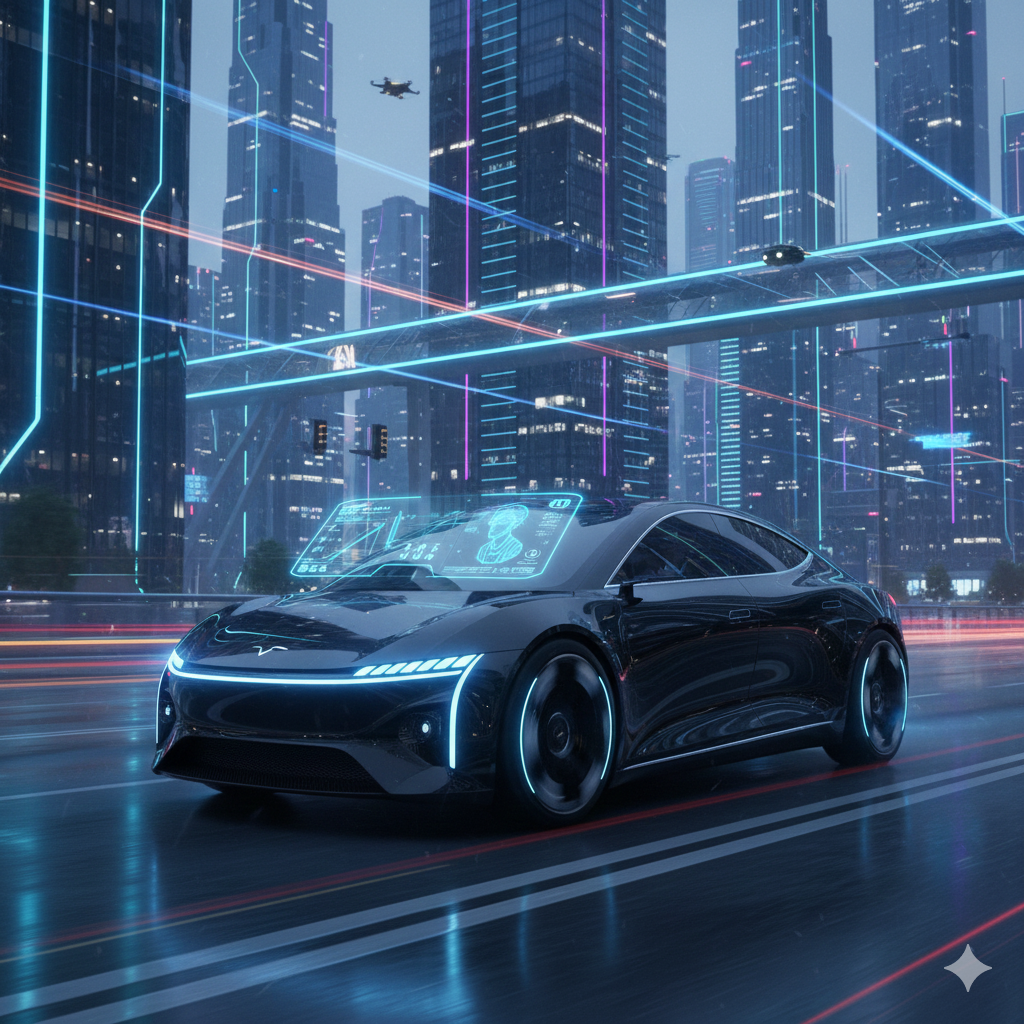
Think of it this way: something that is automatic follows a pre-set, rigid script. Your coffee maker is automatic—it brews at 7 AM because you told it to. It can’t decide to make tea instead if it runs out of coffee beans. An autonomous system, however, can perceive its environment, make decisions based on that information, and execute actions to achieve a goal. A self-driving car is autonomous because it uses sensors and AI to “see” other cars, pedestrians, and traffic lights, and then decides to slow down, change lanes, or stop—all without a human driver steering it every second.
In short: Autonomous = Self-Governing = The ability to operate and make decisions independently.
📱 Where Is “Autonomous” Commonly Used Today?
The concept of autonomy is exploding across various fields. It’s no longer confined to research labs; it’s in our homes, on our roads, and in our pockets.
- 🤖 Robotics & AI: This is the heartland of autonomy. From the Roomba that maps your living room to industrial robots that assemble cars and complex AI chatbots that generate human-like text, these systems learn, adapt, and act on their own.
- 🚗 Self-Driving Vehicles: The most famous example. Companies like Tesla, Waymo, and others are developing cars that can navigate complex urban environments without human intervention, aiming for full vehicle autonomy.
- ✈️ Drones: Modern drones can be programmed with a flight path and will autonomously take off, fly, capture footage, and return to home, avoiding obstacles along the way.
- 🏙️ Smart Cities: Imagine traffic lights that autonomously adjust their timing based on real-time traffic flow to reduce congestion, or streetlights that dim when no one is around. This is the promise of urban autonomy.
- 🌾 Agriculture: Autonomous tractors can plow and harvest fields with GPS-level precision, and drones can monitor crop health, making farming more efficient.
In terms of tone, “autonomous” is a formal, technical term. You’d use it in professional, academic, or tech-focused discussions. In casual conversation, people might simply say “self-driving,” “self-governing,” or “smart.”
💬 How “Autonomy” is Discussed in Tech and Media
While you might not text “autonomous” to your friends, you’ll see it everywhere in articles and discussions about the future. Here’s how the concept plays out in real-world contexts.
Tech Enthusiasts Chatting:
A: Just saw a demo of that new warehouse bot. It’s completely autonomous.
B: No way! So it just wanders the aisles and picks orders by itself?
A: Yep! Uses LIDAR and AI to navigate around people and other bots. It’s wild.
News Headline:
“Breakthrough in AI Autonomy: New Algorithm Allows Systems to Learn from Fewer Examples, Mimicking Human Learning.”
Car Review:
“The car’s Level 2 autonomous driving system handled highway traffic brilliantly, but you still need to keep your hands on the wheel.”
🕓 When to Use and When to Avoid the Term “Autonomous”
Understanding the context is key to using the word correctly.
✅ When to Use “Autonomous”
- In Technical Discussions: When talking about AI, robotics, self-driving tech, or advanced software.
- In Academic Writing: When writing papers on political science (autonomous regions), biology (autonomous nervous system), or computer science.
- In Business & Tech Journalism: When describing innovative products or services that operate independently.
- When Precision is Needed: To specifically distinguish a system that can make decisions from one that merely follows a set sequence (automatic).
❌ When Not to Use “Autonomous”
- In Casual, Everyday Chats: Instead of “I got an autonomous coffee maker,” you’d say, “I got a smart/programmable coffee maker.”
- When Describing Simple Automation: Your automatic door opener or timer-based light switch isn’t autonomous; it’s just automatic.
- When Human Judgment is Irreplaceable: Avoid using it in contexts that require empathy, ethics, or deep creativity. You wouldn’t call a judge or a therapist “autonomous” in their core functions.
Contextual Usage Table
| Context | Example Phrase | Why It Works |
|---|---|---|
| Tech Presentation | “Our new drone features fully autonomous flight planning and obstacle avoidance.” | Highlights the advanced, self-governing capabilities of the product. |
| Casual Conversation | “This new robot vacuum is so smart; it cleans the whole house by itself.” | Uses simple, relatable language that everyone understands. |
| Formal Report | “The system is designed to operate autonomously for extended periods with minimal human oversight.” | Professional and precise, fitting for a technical document. |
🔄 Autonomous vs. Automatic: What’s the Real Difference?
This is the most common point of confusion. Let’s clear it up with a simple comparison table.
| Term | Meaning | Key Ability | Example |
|---|---|---|---|
| Autonomous | Self-governing; independent. | Decision-making based on perception and intelligence. | A self-driving car navigating a detour. |
| Automatic | Operating by itself according to a pre-set routine. | Execution of a fixed sequence. | A coffee maker brewing at a set time. |
| Automated | Using technology to perform tasks with reduced human input. | Efficiency through machinery/software. | An automated assembly line in a factory. |
| Manual | Operated or controlled directly by a human. | Direct human control. | You driving a car with a steering wheel. |
🤔 The Different Levels of Autonomy
Not all autonomy is created equal. In fields like self-driving cars, autonomy is a spectrum. The SAE International defines six levels of driving automation, from Level 0 (no automation) to Level 5 (full automation). This “spectrum of autonomy” is a crucial concept for understanding how independent a system truly is, whether it’s a car, a drone, or a software program.
🌍 Autonomous Systems in Nature and Society
The principle of autonomy isn’t just a human invention. We see it all around us in the natural world and in how we organize our societies. The human autonomic nervous system controls your heartbeat and digestion without you having to think about it—it’s a biological autonomous system. Similarly, an autonomous region within a country, like Catalonia in Spain or Greenland in the Kingdom of Denmark, has the power to self-govern certain internal affairs while still being part of a larger nation.
⚖️ The Ethics and Challenges of Autonomy
With great power comes great responsibility. As we build more autonomous systems, we must grapple with significant ethical questions. Who is liable if a fully autonomous car gets into an accident? How do we ensure that autonomous weapons systems (a controversial and heavily debated area) are used ethically? Can we prevent AI bias from creating unfair autonomous decision-making in areas like hiring or lending? These are not just technical problems but profound societal challenges that we are only beginning to address.
🔮 The Future of Autonomy: What’s Next?
The trajectory is clear: more of our world will become autonomous. We’re moving towards networks of interconnected autonomous systems, often called “autonomous ecosystems.” Imagine a future where your autonomous car communicates with autonomous traffic lights to optimize your commute, while autonomous drones deliver packages to your door, and an autonomous energy grid manages power distribution based on real-time demand. The future of autonomy is one of seamless, intelligent collaboration between machines.
🔄 Similar and Related Concepts
To fully grasp “autonomous,” it helps to know its conceptual cousins.
| Concept | Meaning | Relation to Autonomy |
|---|---|---|
| Artificial Intelligence (AI) | The simulation of human intelligence in machines. | The brain that enables autonomy. |
| Machine Learning (ML) | A subset of AI that allows systems to learn from data. | A primary method for achieving autonomy. |
| Internet of Things (IoT) | The network of physical objects embedded with sensors. | The nervous system that autonomous systems use to perceive the world. |
| Robotics | The field of designing and building robots. | The physical body that acts out autonomous decisions. |
| Algorithm | A set of rules for solving a problem. | The instruction set that guides autonomous decision-making. |
❓ FAQs About “What Does Autonomous Mean”
1. What is a simple word for autonomous?
A simple, everyday word for autonomous is “self-governing” or “independent.” In the context of machines, “self-driving” or “self-operating” are common substitutes.
2. Can a person be autonomous?
Absolutely! When we say a person is autonomous, we mean they are self-sufficient and able to make their own decisions without being controlled by others. It’s a key aspect of personal freedom and maturity.
3. What is the opposite of autonomous?
The direct opposite is “manual” (requiring human operation) or “dependent.” Other opposites include “controlled,” “governed,” or “automatic” (in the sense of following a rigid script without independent decision-making).
💭 Conclusion
So, what does autonomous mean? It’s far more than a tech buzzword. It represents a fundamental shift from direct human control to intelligent, independent operation. From the robot vacuum dutifully cleaning your floors to the grand vision of smart cities, autonomy is weaving itself into the fabric of our lives. Understanding this concept is no longer just for engineers; it’s for anyone who wants to actively understand and participate in the future we are building. The age of autonomy is here, and now you’re equipped with the knowledge to navigate it confidently.