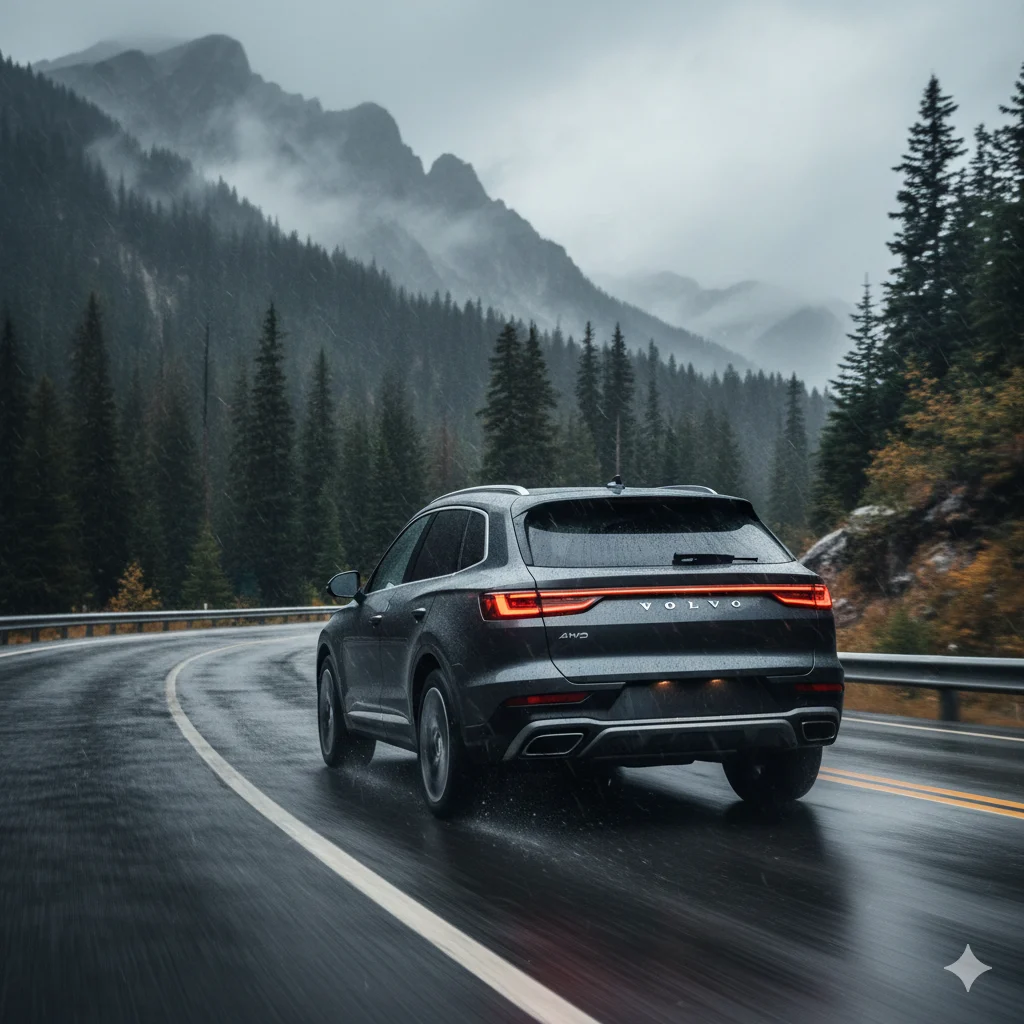

You’re scrolling through used car listings, dreaming of your next upgrade, when you see it plastered on every other description: “AWD.” Or maybe you’re walking through a parking lot and spot the small, shiny badge on the back of a SUV. It sounds technical, maybe even a bit intimidating. Is it a fancy trim level? A special engine code? If you’ve ever nodded along in a conversation about cars, secretly wondering what “AWD” actually does, you’re not alone. It’s one of those ubiquitous acronyms that gets thrown around, leaving many drivers in the dark about what it really means for their daily commute or weekend adventure. Let’s demystify it.
“AWD” on a car means All-Wheel Drive. It’s a vehicle drivetrain system that automatically sends power to all four wheels to improve traction and control, especially in slippery conditions like rain, snow, or loose gravel.
🧠 What Does AWD Mean on a Car?
Let’s break it down simply. “AWD” stands for All-Wheel Drive. Unlike a standard two-wheel-drive car (which sends power only to the front or rear wheels), an AWD system is designed to send power to all four wheels of the vehicle, and it can do so automatically.
The core purpose is traction. By having all four wheels capable of receiving power from the engine, the car has a better chance of maintaining grip on the road when one or two wheels start to slip. Think of it like having four-point stability instead of two. Modern AWD systems use a network of sensors that monitor wheel speed hundreds of times per second. If the system detects a wheel losing grip (spinning faster than the others), it can instantly redirect power to the wheels that still have traction.
In short: AWD = All-Wheel Drive = An automated system for sending power to all four wheels to maximize grip and stability.
⚙️ How Does AWD Actually Work?
Understanding the “what” is easier when you grasp the “how.” At the heart of an AWD system is a component called a center differential or a sophisticated clutch pack. This is the brain of the operation, sitting between the front and rear axles.
- Normal Conditions: On dry pavement, many AWD systems send most of the power to either the front or rear wheels (depending on the car’s design) for better fuel efficiency. It might operate like a two-wheel-drive vehicle.
- Slippery Conditions: The moment wheel sensors detect slippage—like when you accelerate on a snowy patch—the system engages. It can transfer a significant percentage of the engine’s power (often up to 50% or more) to the axle with better grip in a fraction of a second.
- The Result: This transfer happens seamlessly, often without the driver feeling more than a surefooted sense of control. You press the gas, and the car goes, with less drama, wheel spin, or fishtailing.
It’s crucial to distinguish AWD from its close cousin, 4WD (Four-Wheel Drive). 4WD is typically a more heavy-duty, part-time system designed for serious off-roading (like rock crawling or deep mud). It often requires the driver to manually engage it and is best used at low speeds on very challenging terrain. AWD, in contrast, is always active, fully automatic, and optimized for on-road safety and performance in variable conditions.
📱 Where Is AWD Commonly Found and Who Is It For?
AWD isn’t just for one type of vehicle or driver. You’ll find it across the automotive landscape:
- 🚙 SUVs & Crossovers: The most common segment for AWD. Think Honda CR-V, Toyota RAV4, Ford Escape.
- 🚗 Sedans & Sports Cars: Many performance sedans (like Subaru WRX, Audi A4) and even some sports cars use AWD for incredible launch grip and cornering stability.
- 🛻 Trucks: Often offered as an option for improved towing and hauling capability in adverse weather.
Who benefits most from AWD?
- Commute Warriors: Drivers who face daily rain, snow, or ice.
- Adventure Seekers: People who drive on gravel forest service roads, sandy beach accesses, or steep, winding mountain passes.
- Safety-Conscious Families: Anyone who prioritizes an extra layer of active safety for their most precious cargo.
- Performance Enthusiasts: Drivers who appreciate the sharp handling and acceleration grip AWD can provide.
💬 Real-World Scenarios: When AWD Makes a Difference
Let’s look at how AWD translates from a technical spec into real-world driving confidence.
Scenario 1: The Rain-Soaked Highway Merge
Without AWD: You hit a puddle while accelerating onto the fast lane. The front wheels spin momentarily, causing a slight pull (torque steer) and a spike of anxiety.
With AWD: The system senses the front wheel slip, sends power to the rear wheels, and the car pulls ahead smoothly and straight.
Scenario 2: The Snowy Hill Start
Without AWD: You’re stopped on an icy incline. Pressing the gas causes frantic wheel spin. You might slide backwards or sideways.
With AWD: Power is distributed to whichever wheels have the most grip. The car climbs the hill with controlled, steady momentum.
Scenario 3: Gravel Road to the Campsite
Without AWD: The loose surface causes the driven wheels to dig in or slip, making the car feel unstable and “loose.”
With AWD: Power is balanced across all four wheels, helping to “pull” the car through the loose material with more composure and less drama.
✅ When to Choose AWD and When It Might Be Overkill
✅ When AWD is a Wise Choice:
- You live in a region with frequent snow, ice, or heavy rain.
- Your regular routes include unpaved, gravel, or poorly maintained roads.
- You often drive on steep hills or mountain roads.
- You prioritize a feeling of maximum safety and control in adverse conditions.
- You want the best possible launch traction for performance driving.
❌ When You Might Skip AWD:
- You live in a warm, dry climate with consistently good roads.
- Your primary concern is maximizing fuel economy (AWD adds weight and mechanical complexity, reducing MPG slightly).
- You are on a strict budget (AWD typically adds $1,500-$2,500 to a vehicle’s cost).
- You only drive in urban or suburban environments with prompt road-clearing services.
Context Comparison Table
| Context | Example Vehicle/Need | Why AWD Works (or Doesn’t) |
|---|---|---|
| Colorado Mountain Town | Subaru Outback for daily winter driving | Essential. Provides necessary traction for snow-packed roads and mountain passes. |
| Florida Suburb | Honda Accord for commuting | Likely Unnecessary. FWD with good tires is perfectly adequate for rain; the cost isn’t justified. |
| Pacific Northwest | Compact SUV for rainy commutes and forest road weekends | Highly Recommended. Excellent for wet highways and occasional slippery, unpaved surfaces. |
| Performance Driving | Sports sedan for spirited canyon drives | Beneficial. Enhances grip during acceleration out of corners, improving performance and stability. |
🔄 AWD vs. Other Drivetrain Systems: A Quick Comparison
It’s helpful to see AWD in context with other common systems.
| Drivetrain | Acronym | How Power is Sent | Best For… | Key Trait |
|---|---|---|---|---|
| All-Wheel Drive | AWD | Automatically to all four wheels as needed. | On-road safety in variable weather, light off-pavement. | Automatic Traction |
| Four-Wheel Drive | 4WD / 4×4 | Manually engaged to all four, often with a low-range gear. | Serious off-roading, deep snow, mud, rock crawling. | Maximum Capability |
| Front-Wheel Drive | FWD | To the front wheels only. | Most everyday driving; good fuel economy, decent snow traction. | Efficiency & Value |
| Rear-Wheel Drive | RWD | To the rear wheels only. | Performance driving, sporty handling (in dry conditions). | Sporty Dynamics |
❓ FAQs About AWD on a Car
Q: Is AWD the same as 4×4?
A: No. While both involve four wheels, AWD is typically a full-time, automatic system for on-road use. 4WD (4×4) is often a part-time, manually-selectable system built for severe off-road conditions.
Q: Do I still need winter tires if I have AWD?
A: Absolutely yes. AWD helps you go and accelerate. It provides little to no advantage when braking or turning. Winter tires are crucial for overall cold-weather safety, as they improve grip in all driving maneuvers on snow and ice.
Q: Does AWD use more gas?
A: Generally, yes. The added weight and mechanical drag of the AWD system can reduce fuel economy by 1-3 MPG compared to an identical two-wheel-drive model.
Q: Can AWD help prevent accidents?
A: It can help avoid some loss-of-control situations (like getting stuck or spinning tires) by providing better traction during acceleration. However, it is not a substitute for safe, attentive driving, especially regarding braking and cornering limits.
Q: Is AWD worth the extra cost?
A: It depends entirely on your driving environment and needs. For many in snowy climates, the peace of mind and capability are well worth the initial investment and slight fuel cost. For others, it’s an expense they may never truly utilize.
🎯 Conclusion
So, what does AWD mean on a car? It’s far more than a marketing badge or a vague suggestion of “capability.” AWD represents an intelligent, automated system dedicated to keeping you moving forward with confidence when the road surface tries to hold you back. It’s the technology that turns a white-knuckle drive in a snowstorm into a manageable, controlled journey.
Before you decide, weigh your reality: your climate, your roads, and your driving style. Pair it with a set of high-quality, season-appropriate tires—the true point of contact between your car and the world. When chosen for the right reasons, AWD isn’t just a feature; it’s a partner in safety, granting you the freedom to drive through life’s unpredictable conditions with a firmer grip on the wheel and the road ahead.