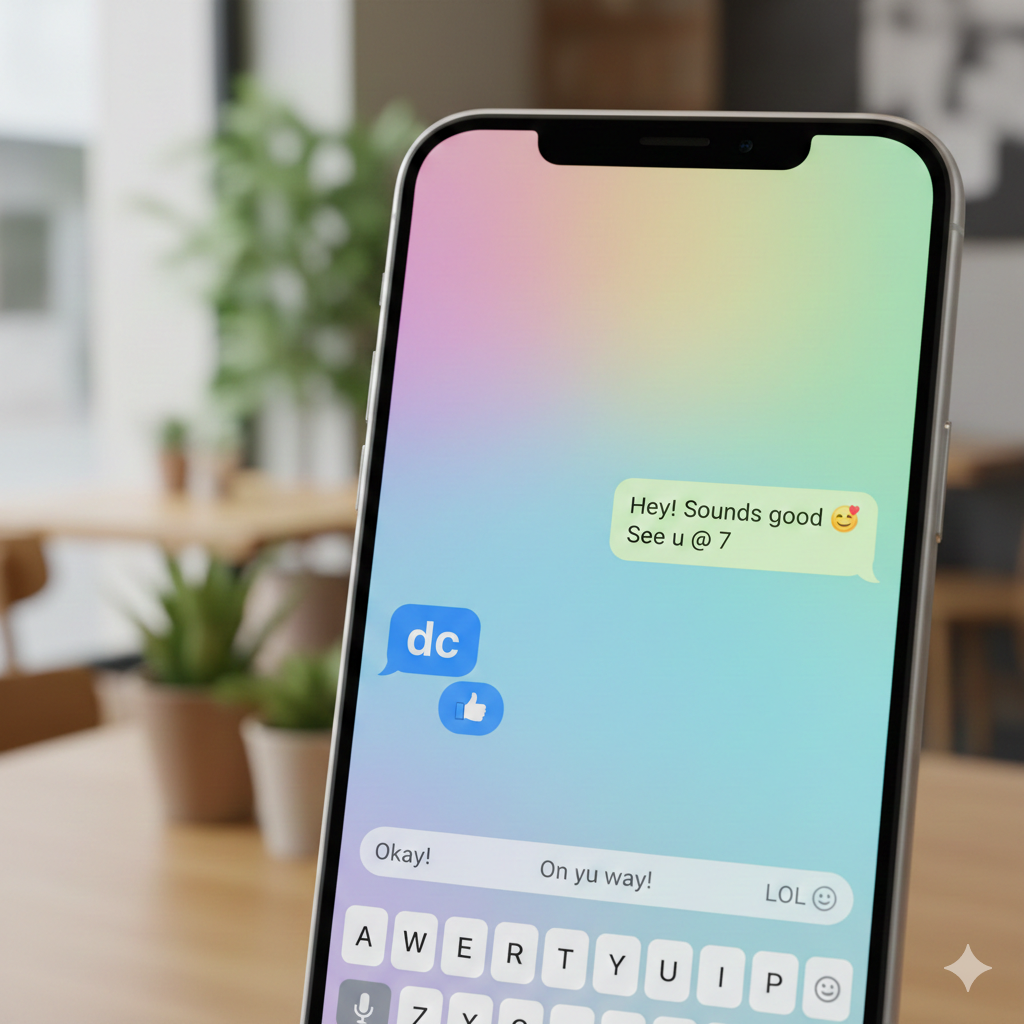

You’re in the middle of a frantic group chat, plans are flying everywhere, and someone suddenly drops a “dc” into the conversation. The chat moves on, but you’re left staring at your screen, a little lost. Was that a typo? Are they talking about comics? I’ve been there. That moment of confusion is exactly why text slang can be both a blessing and a curse. It creates a shortcut for those in the know and a tiny puzzle for everyone else. But don’t worry, you’ve come to the right place to solve it.
In texting and social media, “dc” most commonly means “Don’t Care.” It’s a casual, often blunt way of saying you’re indifferent about a topic or decision. For example, if a friend asks, “Pizza or tacos?” you might reply, “dc, you choose.” 😊
🧠 What Does DC Mean in Text?
Let’s cut through the noise. While “DC” can famously stand for Washington, D.C., or the comic giant DC Comics, in the fast-paced world of digital communication, it has been stripped down to a quick, two-letter expression of apathy.
The full form of “dc” in this context is “Don’t Care.” It’s a shorthand used to convey indifference, a lack of preference, or a neutral stance on a subject. The tone isn’t inherently rude; it’s often just efficient, saving the user from typing out three whole words. It’s the textual equivalent of a shrug.
Example Sentence: “Where do you want to go for dinner?” “dc, whatever you’re in the mood for.
In short: dc = Don’t Care = I’m indifferent/You decide.
📱 Where Is DC Commonly Used?
dc” has found its home primarily in informal, real-time communication platforms where brevity is king. You’re unlikely to see it in an email to your boss, but you’ll definitely spot it in these digital spaces:
- Text Messaging (SMS): The original hub for quick slang between friends and family. 💬
- Snapchat: Where conversations are fast and ephemeral, perfect for shortcuts like “dc.” 👻
- Instagram & Twitter (X) DMs: Used in direct messages when making casual plans or discussing opinions.
- TikTok Comments & Captions: You might see it in comments like “dc about the drama, just here for the memes.” 🎵
- Gaming Chats (Discord, in-game messaging): Gamers use it to quickly express a lack of preference for a map, character, or strategy. 🎮
- WhatsApp & Telegram Group Chats: A common response when polling the group for ideas.
Tone & Formality: “dc” is overwhelmingly casual and informal. It’s best reserved for friends, peers, and family members you’re comfortable with. Using it in a formal or professional setting would be considered unprofessional and potentially disrespectful.
💬 Examples of DC in Conversation
Context is everything. Let’s look at how “dc” flows naturally in different texting scenarios.
- Making Plans
- A: hey, movie at 7 or 9?
- B: dc, whichever is easier for you.
- Expressing Opinion on Drama
- A: can you believe she said that to him??
- B: tbh, i dc about their relationship stuff.
- Choosing Food
- A: Getting food, you want a burger or sushi?
- B: dc 😋 surprise me!
- In a Group Chat Vote
- A: Okay, vote: beach or hiking this weekend?
- B: beach 🏖️
- C: hiking 🥾
- D: dc, i’m down for either.
- Responding to a “What’s Up?”
- A: what are you up to tonight?
- B: dc yet, probably just gonna chill.
- A More Blunt / Annoyed Use
- A: You need to apologize for what you said.
- B: i dc what they think.
- On Social Media (Comment)
- Post: “Who’s side are you on? Team Green or Team Blue?”
- Comment: “dc both are valid lol”
🕓 When to Use and When Not to Use DC
Knowing when to use “dc” is just as important as knowing what it means. Using it incorrectly can come off as rude or dismissive.
✅ When to Use “DC”
- With Close Friends: When you genuinely have no preference and want to be easy-going.
- In Casual Group Chats: When the group is deciding on something low-stakes, like food or a movie.
- To Express Genuine Indifference: When you truly don’t have a strong opinion on a topic.
- To Delegate a Decision: When you’re happy to let the other person choose.
❌ When NOT to Use “DC”
- In Formal or Professional Communication: Never use it in work emails, messages to your boss, or professional chats.
- During Serious Conversations: If a friend is sharing a problem or seeking serious advice, “dc” is incredibly dismissive.
- When You Actually Care: If you have a strong opinion, using “dc” can lead to resentment if you end up unhappy with the outcome.
- With People You Don’t Know Well: It can be perceived as unfriendly or rude without the context of an established, casual relationship.
- In Urgent Situations: If someone needs a clear, decisive answer, “dc” is unhelpful and frustrating.
DC Usage Context Table
| Context | Example Phrase | Why It Works (or Doesn’t) |
|---|---|---|
| Friend Chat | “dc where we eat, I’m just hungry 😄” | Casual, friendly, and puts the decision on the other person in a low-pressure way. |
| Work Chat | “I don’t have a preference, you can choose.” | Polite and professional. It conveys the same meaning as “dc” but with appropriate language. |
| Formal Email | “Please proceed with the option you deem most suitable.” | Formal and clear. “dc” has no place here and would damage your professional image. |
| Serious Talk | “I hear you, and I want to understand why you feel that way.” | Shows empathy and engagement. Using “dc” would shut down the conversation entirely. |
🔄 Similar Slang Words or Alternatives
“dc” exists in a whole ecosystem of slang that expresses opinions, indifference, and agreement. Here’s a quick guide to some of its linguistic cousins.
| Slang | Meaning | When to Use It |
|---|---|---|
| IDC | “I Don’t Care” | The more explicit, capitalized version of “dc.” Can sound slightly stronger or more intentional. |
| IDK | “I Don’t Know” | For when you lack knowledge, not just interest. The key difference between ignorance and indifference. |
| FR | “For Real” | Used to express agreement or to emphasize that you’re being serious. |
| Bet | “Okay,” “For sure,” “Agreed.” | A confirmation or expression of agreement, the opposite of indifference. |
| SMH | “Shaking My Head” | Expresses disappointment or disbelief, often in response to something foolish. |
| Lowkey | “Sort of,” “A little bit,” “Secretly.” | Used to express a mild or understated feeling or opinion. |
| FWIW | “For What It’s Worth” | A polite way to offer an opinion that the recipient might not care about. |
| IMO/IMHO | “In My Opinion / In My Humble Opinion” | A precursor to sharing a subjective thought. |
| Hbu? | “How about you?” | A question to return the decision or opinion back to the other person. |
| You pick | N/A | A plain-English, friendly alternative to “dc” that is never misinterpreted as rude. |
🤔 Other Potential Meanings of DC
While “Don’t Care” is the champion of the texting world, it’s responsible to acknowledge that “dc” can stand for other things depending on the context. If the conversation is about movies, comics, or politics, it might mean something else entirely.
- Washington, D.C.: The capital of the United States.
- DC Comics: The famous comic book publisher behind Superman, Batman, and Wonder Woman.
- Direct Current: An electrical term referring to a current that flows in one direction consistently.
- Detective Comics: The original name of DC Comics.
- Dual Citizenship: In certain forums or legal discussions.
How to tell the difference? Always look at the context of the conversation. If your friend is asking about your weekend plans, it’s “Don’t Care.” If they’re talking about a trip or a political news story, it’s probably Washington, D.C.
❓ FAQs About DC
1. Is “dc” rude to use?
It can be. “dc” is very casual and can come across as blunt or dismissive if used with someone you aren’t close to, or in a serious situation. With friends who understand your tone, it’s usually fine. When in doubt, spell it out (“I don’t care” or “you choose!”).
2. What’s the difference between “dc” and “idc”?
They mean the exact same thing: “Don’t Care” and “I Don’t Care.” “idc” is just one letter longer and can sometimes feel a tiny bit more emphatic, but they are largely interchangeable.
3. Can “dc” ever be used in a flirty way?
It’s not typically a primary flirting word, but it can be used in a playful, “easy-going” manner. For example, if someone asks, “What should we do on our date?” and you reply, “dc 😉, as long as it’s with you,” it transforms from indifference to charming flexibility. The emoji and follow-up text are key here!
✍️ The Evolution of Slang Like DC
Language is constantly evolving, and digital communication acts as a powerful accelerator. Abbreviations like “dc,” “idk,” and “tbh” are a natural response to the need for speed and efficiency on tiny keyboards and fast-moving chats. They create a sense of in-group belonging—a shared digital language for a generation. Understanding these terms is less about memorizing definitions and more about understanding the culture of communication they represent. They prioritize speed and casual connection over formality and precision.
Conclusion
So, the next time you see “dc” pop up in your messages, you won’t be left in the dark. You’ll know it’s a quick, casual way for someone to say, “Don’t Care,” handing the decision back to you or expressing their indifference. Remember to use this power wisely—reserve it for your casual chats to keep things light and efficient, and avoid it anywhere that requires a touch of professionalism or empathy. Now go forth and text with confidence