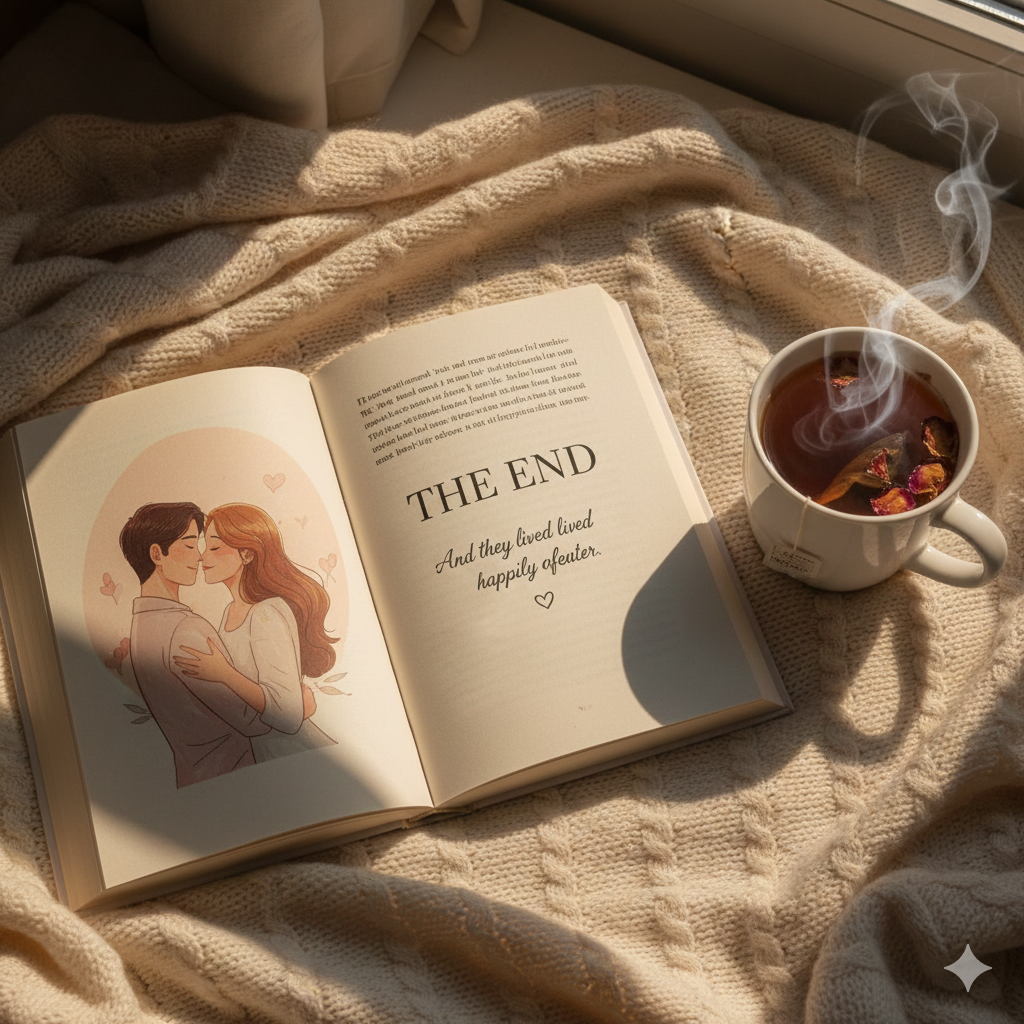

You’ve just finished the most incredible romance novel. The main characters have been through hell and back—misunderstandings, external threats, maybe even a fake-dating scheme or a dragon. You’re turning the final pages with bated breath, your heart in your throat, desperately needing to know how it ends. Then, you see it. In the book’s description, a reviewer’s comment, or an author’s note: “This book has a satisfying HEA!” You breathe a sigh of relief, but a tiny question lingers: What does HEA actually mean? If you’ve ever felt that flicker of confusion, you’re not alone. Welcome to the wonderful, heartwarming world of literary shorthand.
HEA means “Happily Ever After.” It’s a genre promise, primarily in romance novels, guaranteeing that the main characters will end the story in a state of lasting love, happiness, and commitment, with all major conflicts resolved.
🧠 What Does HEA Mean in Text and Books?
Let’s break it down. HEA is an acronym that stands for Happily Ever After. It’s the literary equivalent of the classic “…and they lived happily ever after” that concludes our favorite fairy tales. However, in modern genre fiction, especially romance, it has evolved into a specific and crucial tag.
It’s not just a vague feeling of hope; it’s a concrete guarantee from the author to the reader. When a book is marketed as having an HEA, it promises that the central romantic couple will overcome their obstacles and end the story in a committed, loving relationship. This typically means they are together, in love, and their future is secure—think marriage, a profound commitment, or a clear, unambiguous partnership.
Example: “I only read romance novels because I know I’ll always get a guaranteed HEA; it saves me from sad endings.”
In short: HEA = Happily Ever After = A guaranteed, resolved happy ending for the main characters.
📚 The Crucial Difference: HEA vs. HFN
To truly understand HEA, you need to know its close cousin: HFN. While both signal a positive conclusion, they represent different stages in a relationship’s journey.
- HEA (Happily Ever After): This implies permanence. The story concludes with the belief that this is the final,* enduring* partnership for the characters. The major external and internal conflicts are fully resolved, and the ending feels definitive and long-term. It’s the “forever” promise.
- HFN (Happy For Now): This ending is positive and hopeful, but it lacks the permanence of an HEA. The characters are together and happy at the moment, but there’s an acknowledgment that future challenges or growth could change things. It’s a believable ending for a new relationship or a story where long-term certainty isn’t the focus.
Think of it this way: A wedding and a declaration of forever is an HEA. A couple deciding to officially date and see where things go, ecstatically in love, is an HFN.
HEA vs. HFN: A Quick Comparison
| Acronym | Stands For | Implication | Example Scenario |
|---|---|---|---|
| HEA | Happily Ever After | Permanent, resolved, “forever” ending. | The couple gets married, stating their eternal love after defeating the villain. |
| HFN | Happy For Now | Temporary, hopeful, “for now” ending. | The couple survives a crisis and decides to move in together, excited for their future. |
📱 Where Is HEA Commonly Used?
The term HEA is deeply embedded in the culture of specific online communities. You won’t typically find it in formal literary criticism, but you will see it everywhere readers and authors gather.
- Goodreads & StoryGraph: In book reviews, star ratings, and user-created lists (e.g., “Best Fantasy Romance with HEA”).
- Amazon & Retailer Listings: In the book’s product description, often used by authors or publishers to signal the genre and ending type.
- BookTok & Bookstagram: Heavily used in recommendations, reviews, and promotional posts. It’s a quick way to convey a book’s tone.
- Author Blogs & Websites: Authors use it to manage reader expectations and attract their target audience.
- Online Book Clubs & Forums: Readers use it to ask for and give specific recommendations.
Tone & Formality: HEA is casual, community-centric jargon. It’s the friendly, insider shorthand of the book world, perfect for social media but not for an academic paper.
💬 Why is the HEA Promise So Important in Romance?
The guaranteed HEA isn’t just a nice-to-have feature in romance novels; it’s a non-negotiable genre convention. Understanding this is key to understanding the romance reader’s psyche.
- It’s a Psychological Comfort: In a world full of uncertainty, readers pick up a romance for an emotional escape with a guaranteed payoff. The HEA provides a safe, comforting reading experience where the reader’s emotional investment is protected.
- It Shifts the Suspense: The question in a romance is never “Will they end up together?” but “How will they overcome these incredible obstacles to be together?” The HEA allows the reader to enjoy the angsty, dramatic journey without the fear of being emotionally devastated at the finish line.
- It’s a Contract with the Reader: When an author labels a book a romance, they are entering an unspoken contract to deliver an HEA. Breaking this contract is a surefire way to receive negative reviews and alienate readers.
💬 Examples of HEA in Conversation (Online & Real Life)
Let’s see how HEA is used naturally in bookish chats.
Example 1: In a Book Review
Reviewer A: “Loved the slow-burn tension in this enemies-to-lovers story! The character development was amazing, and the HEA was so satisfying after all they went through. 5 stars!”
Example 2: Asking for a Recommendation on Social Media
User B: “Hey #BookTok, I’m in a reading slump. Need a historical romance with a grumpy/sunshine pairing and a guaranteed HEA. Any suggestions? 📚”
Example 3: Reassuring a Friend
Friend C: “I’m at the 80% mark and things are looking REALLY bad for the couple. I’m stressed!”
Friend D: “Don’t worry! The author confirmed this has an HEA. Just enjoy the ‘darkest before the dawn’ moment! 😉”
Example 4: Discussing a Series
Reader E: “This is the first book in a trilogy. Does it have an HEA or an HFN?”
Reader F: “It’s a complete HEA for the main couple! The next books follow different characters.”
Example 5: An Author Promoting Their Book
Author G: “My new small-town romance is out now! Featuring a single dad, a baker with a secret, and of course, a sweet and steamy HEA. Link in bio! ❤️”
🕓 When to Use and When Not to Use HEA
Knowing when to deploy this acronym will help you sound like a bookish pro.
✅ When to Use HEA
- When discussing or reviewing romance novels.
- When asking for book recommendations in reader communities (BookTok, Bookstagram, etc.).
- When clarifying the ending of a book for other readers.
- In casual conversations with fellow book lovers.
❌ When Not to Use HEA
- In formal essays or academic literary analysis (use “a resolved happy ending” or “a conventional comic ending” instead).
- When discussing genres where happy endings are not a central promise (e.g., literary fiction, tragedies, horror).
- When talking to someone who isn’t familiar with book slang.
HEA in Different Contexts
| Context | Example Phrase | Why It Works |
|---|---|---|
| Friend Chat / Book Club | “I needed that fluffy HEA after a tough week!” | Casual, relatable, and uses community-specific language. |
| Online Book Review | “A great read with a satisfying HEA.” | Informs potential readers and manages expectations effectively. |
| Formal Literary Discussion | “The novel concludes with a conventional happy ending.” | Uses standard, formal language appropriate for the context. |
🔄 Similar Slang Words or Alternatives
The bookish world is full of acronyms and slang to describe tropes and endings. Here’s a quick guide to HEA’s linguistic neighbors.
| Slang | Meaning | When to Use It |
|---|---|---|
| HFN | Happy For Now | Describing a positive but less permanent ending than HEA. |
| MMC / FMC | Male Main Character / Female Main Character | Referring to the protagonists in a story. |
| Trope | A common theme or plot device (e.g., Enemies-to-Lovers). | Discussing the common storytelling elements in a book. |
| Slow Burn | A romance that develops very slowly over time. | Describing the pacing of the romantic relationship. |
| Angst | A story with high emotional turmoil and suffering. | Warning a reader about or praising a book’s emotional depth. |
| Biker | A story with high emotional turmoil and suffering. | Warning a reader about or praising a book’s emotional depth. |
❓ FAQs
1. Is HEA only for romance novels?
Primarily, yes. While a non-romance book might be described as having a “happy ending,” the specific term HEA is deeply tied to the romance genre and its reader expectations. You might see it occasionally in romantic subplots within other genres, like fantasy or sci-fi.
2. Can a book have a sad ending and still be a romance?
By the strict, modern definition of the genre, no. A central tenet of the romance genre is the emotionally satisfying and optimistic ending (HEA or HFN). A book that ends with the main couple permanently separated or one of them dead would typically be classified as a tragic love story or women’s fiction, not a romance novel.
3. Why do some readers get angry if a promised HEA isn’t delivered?
Because it breaks the fundamental “contract” of the genre. Readers often self-select books based on their mood and emotional needs. Picking up a book marketed as a romance with an HEA creates a specific expectation. A bait-and-switch ending can feel like a betrayal of the reader’s trust and time, leading to negative reactions.
✨ Conclusion
So, the next time you see HEA tucked into a book review or a TikTok caption, you’ll be in on the secret. It’s more than just an acronym; it’s a beacon of hope, a promise of satisfaction, and the golden standard of the romance genre. It’s the community’s way of saying, “Don’t worry, your heart is safe here.” Now that you’re armed with this knowledge, you can confidently navigate bookish conversations, seek out the perfect stories for your mood, and maybe even use a little HEA magic yourself. Happy reading